
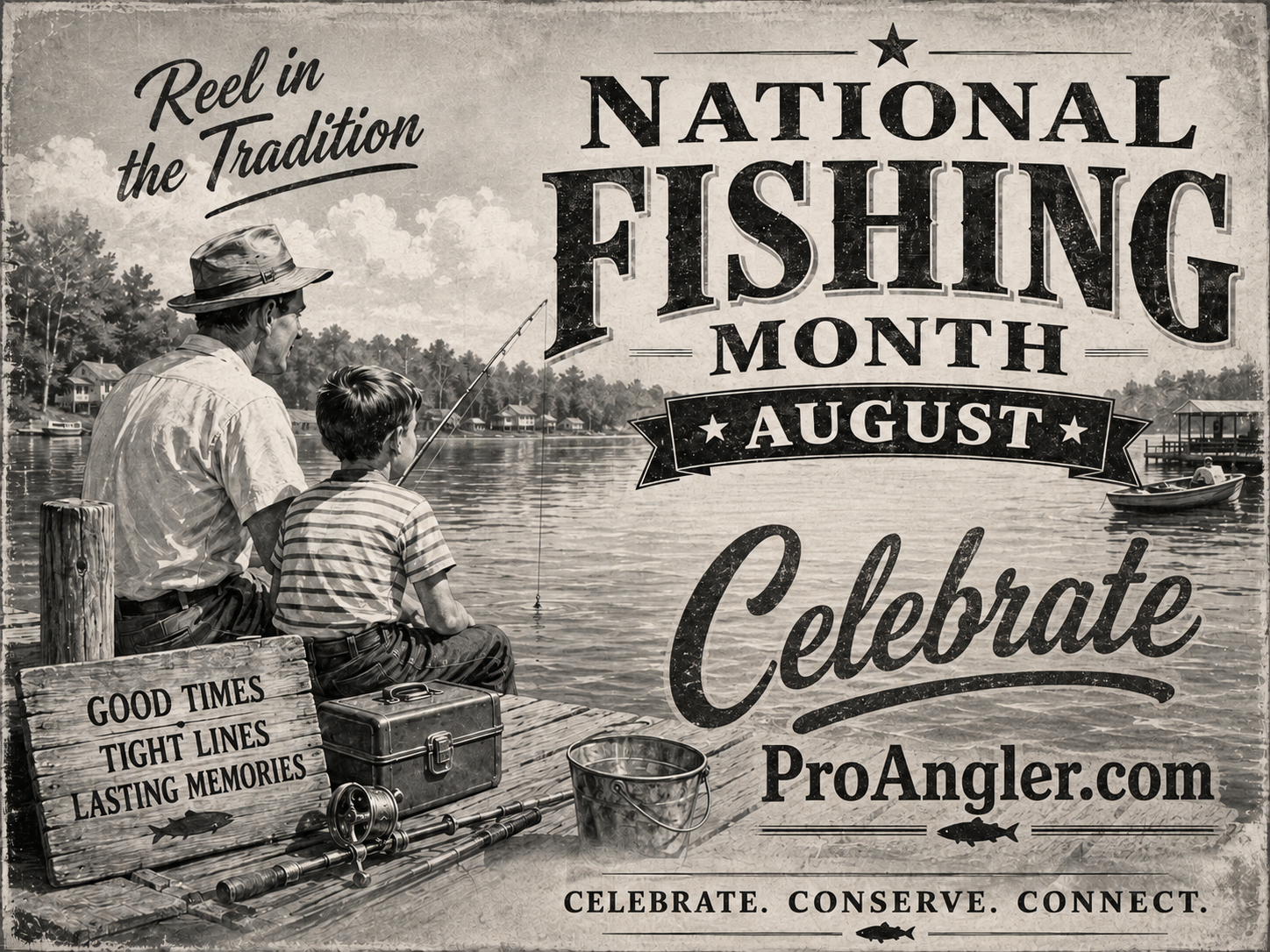
National Fishing Month: Pass It On
August is National Fishing Month. A time to celebrate more than the fish we catch. It is a chance to pass along the traditions, lessons, and stories that have kept generations of anglers returning to the water.
For many of us, fishing began beside someone who took the time to teach us. A parent showed us how to tie a knot. A grandparent helped us bait a hook. An older brother, sister, uncle, aunt, or family friend taught us how to cast without hooking the nearest tree.
Those early fishing trips were rarely perfect. The summer sun was hot. The bugs were relentless. Lines got tangled, bait disappeared, and the fish did not always cooperate. But somehow, those became the days we remembered.
Teaching a child to fish is not really about catching fish. It is about slowing down long enough to share something meaningful.
It is the excitement of watching a bobber disappear beneath the surface. The nervous rush of reeling in a first fish. The smile that comes when a child realizes there is an entire world waiting beneath the water.
It is also an opportunity to teach patience, responsibility, conservation, and respect for the outdoors. Children learn how to care for the places they visit, properly handle fish, clean up after themselves, and understand that healthy waters must be protected for the next generation.
Those lessons tend to stay with them.
A single August fishing trip can become an annual family tradition. That tradition can grow into a lifelong passion. One eventually passed down to another child standing on the same dock, shoreline, or boat.
You do not need expensive equipment or a trophy-sized catch to create that kind of memory. A simple rod, a few hooks, some bait, and a nearby pond are often enough. Let the kids make a few mistakes. Let them ask questions. Let them explore. Most importantly, let the day belong to them.
This National Fishing Month, take someone fishing who has never been.
Teach them how to cast. Help them catch their first fish. Show them why early mornings, quiet water, and time spent outdoors have meant so much to generations of anglers.
The fish may or may not bite.
The memory probably will.